WILL AI TAKE OVER THE WORLD IN THE FUTURE?
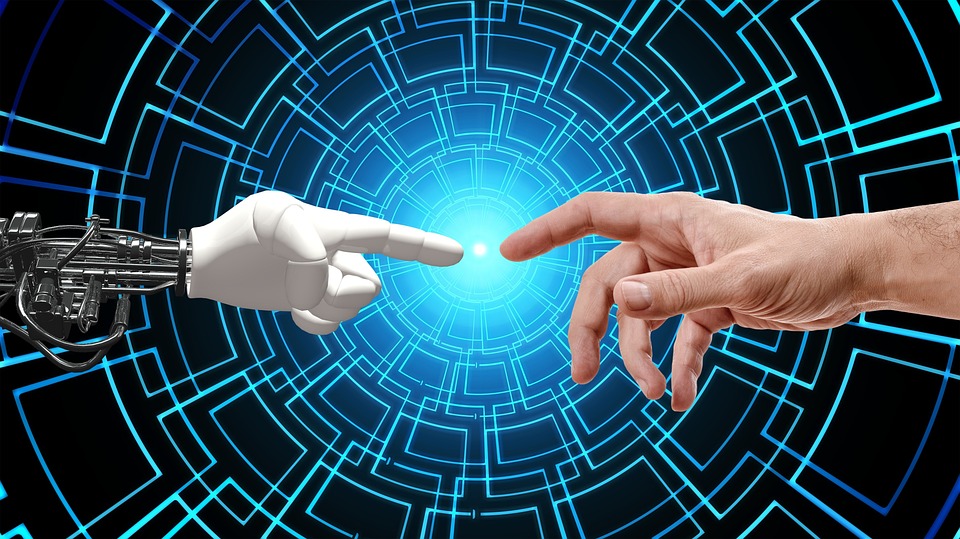
UNDERSTANDING ARTIFICIAL INTELLIGENCE (AI)
Artificial Intelligence, often referred to as simulated intelligence, represents a significant advancement in computer science that is poised to become a crucial aspect of advanced software in the coming years. While there are risks involved, these technologies also present numerous opportunities. AI is likely to be employed not only for defensive but also for offensive cyber operations. As a result, new methods of digital attacks will emerge, targeting the vulnerabilities inherent in AI technology. Ultimately, AI’s hunger for vast amounts of structured data will redefine our understanding of data security, necessitating effective global governance to ensure this revolutionary technology fosters universal safety and prosperity.
In simpler terms, artificial intelligence involves building computer systems capable of performing tasks that typically require human intelligence, such as making decisions, object recognition, and solving complex problems.
AI is essentially a branch of computer science that focuses on creating intelligent machines that can think and function like humans, engaging in tasks such as speech recognition, problem-solving, learning, and planning.
THREE TYPES OF ARTIFICIAL INTELLIGENCE
- Artificial Narrow Intelligence (ANI), which is specialized and limited in its capabilities.
- Artificial General Intelligence (AGI), which possesses human-like abilities.
- Artificial Super Intelligence (ASI), which surpasses human intelligence.
INNOVATIONS AND TECHNOLOGIES IN ARTIFICIAL INTELLIGENCE
1. Natural Language Generation: This software process produces natural language outputs by translating data into a readable format. It includes elements like text planning, sentence structuring, and realization of the text. The primary goal of Natural Language Generation (NLG) is to employ AI to convert datasets into coherent written or spoken narratives. Typically, the ideas that shape this output are clearly defined within the system.
Common applications of NLG include generating various reports, such as weather forecasts and medical records, creating captions for images, and powering chatbots. Automated NLG mimics the way humans articulate their thoughts into writing or speech.
- Speech Recognition: Another way to refer to speech recognition is Automatic Speech Recognition (ASR), which enables computers to understand spoken commands and perform required tasks. This technology allows for the conversion of spoken language into text, enabling users to interact with computers naturally through voice.
2. Virtual Agents: These are AI-powered programs designed to assist users just like human agents do. Often referred to as virtual or voice assistants, they can provide various types of support and execute tasks based on specific client needs. These agents can function through phone calls, chats, and messaging platforms, offering a more seamless experience for users and human representatives alike. They handle repetitive customer interactions, allowing human teams to focus on more complex cases.
3. Biometrics: Biometrics involves integrating unique biological traits of individuals into a technological format for security and identification purposes. This could include technologies such as facial recognition and fingerprint scanning.
Biometric methods leverage distinct biological measurements or physical characteristics for identifying individuals. Techniques include fingerprint mapping, facial recognition, and retinal scans.
Experts suggest that features such as ear shape, posture, walking patterns, unique body scents, vein patterns, and even subtle facial changes can serve as unique identifiers in biometric technology.
4. Machine Learning: This is a foundational aspect of AI where algorithms are used to identify patterns and insights in data, enabling systems to make informed decisions over time. By exploring and utilizing machine learning techniques, developers continuously enhance the capabilities of computer systems in terms of perception, cognition, and action.
Deep learning, a more sophisticated form of machine learning, utilizes large neural networks to recognize intricate patterns and autonomously make predictions, often resembling how the human brain processes information.
5. Robotic Process Automation (RPA): RPA is a technology that allows for the creation, deployment, and management of software robots that can mimic human actions. It streamlines processes by reducing friction, saving time, and cutting costs, while ensuring that service providers have the information and time necessary to make optimal decisions. Our robots replicate human keystrokes and navigate screens using comprehensive solutions like UIPath Document Understanding.
6. Peer-to-Peer Network: Also known as a point-to-point network, this architecture connects computers with equal privileges for data sharing. A peer-to-peer (P2P) network allows individuals to interact directly with each other without the need for an intermediary. Buyers and sellers can transact directly through P2P services.
P2P networks are commonly used for sharing large files over the internet. For instance, several online gaming platforms utilize P2P technology to facilitate game distribution among users, as exemplified by Blizzard Entertainment’s approach to distributing titles like Diablo III, StarCraft II, and World of Warcraft.
NOW THE REAL QUESTION IS – WILL AI TAKE OVER THE WORLD IN THE FUTURE?
No, artificial intelligence is not going to take over the world. Films like I, Robot are purely fictional and emphasize the imaginative aspects of AI. In reality, AI serves as a powerful business tool that enhances organizations and their customer service capabilities. It aims to improve user experience rather than dominate the world. Rather than a takeover, AI is about providing new methods for addressing a range of complex problems humans face.
Current Trends and Future of Artificial Intelligence
One of the leading trends in artificial intelligence is predictive analytics, which aims to enhance research. This approach uses data, statistical algorithms, and machine learning methods to forecast future outcomes based on historical information.
Businesses can leverage AI in numerous ways, such as gaining insights into markets and customers, streamlining sales processes, providing virtual assistance, unlocking valuable data, and delivering a tailored customer experience.
Future Developments in Artificial Intelligence
AI is set to significantly influence the future across nearly every sector. It is currently driving advancements in emerging technologies like big data, robotics, and the Internet of Things (IoT), and will remain a major force in technological innovation in the years ahead.
AI could enhance human creativity, relieve us from complicated or tedious tasks, and even take over hazardous jobs. As AI technology progresses, it will coincide with the digitization and smart evolution of industries, paving the way for a future filled with endless possibilities.
1. Deep Learning Processors:
The development of cutting-edge chips designed to accelerate the performance of deep neural networks is a key advancement. These chips enable more efficient training of models for recognizing images, speech, and text. While many may not be aware of these innovations, professionals in the field understand the increasing power of newer, faster deep learning chips.
Since AI is highly computationally intensive, advanced computing technologies have made it possible for chips to process data at greater speeds, which is vital for the evolution of AI.
2. Algorithmic Advancements and New Frameworks:
The emergence of new AI concepts, such as reinforcement learning, generative adversarial networks, and program synthesis, marks another significant development. As AI concepts continue to evolve, they are becoming increasingly sophisticated and powerful. For example, some neural networks can translate languages and solve mathematical problems independently, showcasing capabilities previously unattainable.
3. Enhanced Understanding of Human Behavior:
AI is now advancing its ability to comprehend human emotions and react accordingly. This progress has led to remarkable changes in system design and adjustments to contemporary lifestyles. Moreover, AI can anticipate human behavior; for instance, certain AI systems can now determine whether someone is being dishonest.
Latest Trends in Artificial Intelligence
Over the past decade, AI has infiltrated a wide array of industries, resulting in a significant surge in AI- and machine learning-based tools, applications, and platforms. These advancements are transforming sectors such as healthcare, manufacturing, law, finance, retail, real estate, accounting, and digital marketing.
- Automation of Intelligent Processes:
Companies are increasingly seeking intelligent automation tools to tackle business challenges while enhancing productivity, efficiency, and accuracy. Intelligent Process Automation (IPA) embodies this trend by merging Robotic Process Automation (RPA) with AI to facilitate seamless end-to-end business automation and accelerate digital transformation.
- A Turning Point in Cybersecurity:
As data becomes more valuable, cybercriminals are constantly seeking new avenues to exploit it. One drawback of beginner-level AI is that it can be manipulated by hackers to access sensitive data. Consequently, a crucial trend in AI is developing technologies designed to detect and report common cyber threats. Additionally, AI is being harnessed to improve antivirus software, thereby preventing potentially devastating malware attacks.
- AI for Customized Services:
As AI gains in efficiency and power, acquiring consumer data has never been easier. A prominent trend in marketing is the growing focus on personalized services, often achieved by analyzing online behaviors related to specific search queries.
- AI Development Automation:
In the coming years, expect significant advancements in ‘AI for AI,’ which focuses on using AI to automate the processes involved in creating, deploying, managing, and operating AI models. This will enhance problem-solving capabilities, improve efficiencies, and provide researchers with valuable insights.
- Artificial Intelligence in Healthcare:
AI is making groundbreaking contributions to healthcare, enabling more effective and safer care worldwide while enhancing the detection, prevention, and treatment of diseases. Furthermore, AI’s capacity to gather real-time data from electronic health records, emergency admissions, and equipment usage, and analyze it meaningfully, significantly improves hospital administration and drug discovery processes.
Top Future Applications of Artificial Intelligence in Healthcare 2022
Here are some of the most notable areas where AI is being applied in healthcare:
- Healthcare Management:
Administrative costs can represent between 15% and 25% of total healthcare expenditures. Tools aimed at streamlining and enhancing administration are valuable for insurers, payers, and providers. Detecting and reducing fraud could yield immediate benefits, as healthcare fraud can occur on many levels and involve various parties.
In severe cases, this type of fraud leads to insurers being charged for services not rendered or unnecessary procedures being conducted for financial gain. There are also instances of fraudulent devices or test kits being billed to insurers.
- Public Health:
Artificial intelligence is already making strides within the public health sector.
- Machine Learning (ML) algorithms are being utilized on extensive public health datasets. The CDC has compiled a variety of examples showcasing how AI has been employed in public health analyses related to COVID-19, among other topics.
- Natural Language Processing (NLP) is also being used in public health environments.
- Data from diagnostic imaging is increasingly being leveraged for population-wide analysis and predictive insights.
- Medical Research:
- AI has a vast array of applications in medical research, including drug discovery and clinical trials.
- The quest for new medications involves substantial challenges. Computer-aided drug design (CADD) is a complex field that plays a crucial role in this process.
- Sometimes, the goal is to repurpose existing drugs for new uses. A recent instance involved AI evaluating cell images to identify which drugs were most effective for individuals with neurodegenerative diseases. When neurons positively respond to treatments, they exhibit changes in shape, a process that standard computers often struggle to detect due to speed limitations.
